- Print this page
- Download as PDF
- Share this page
Some production methods must be declared on a food label, eg. the use of additives.
A range of other production methods, such as free range, organic or vegan and those that are based on cultural or religious practices may be declared voluntarily. However, when they are declared, labelling laws apply.
Food additives
Food additives, both natural and synthetic, are used to make processed foods easier to use, or ensure food is preserved safely. All food additives must be approved by Food Standards Australia New Zealand (FSANZ) and declared in the ingredients list on a food label.
See > Production methods > Additives
Genetically modified (GM) food
Genetically Modified (GM) food that contains novel DNA or protein - must show the words ‘genetically modified’ on the label.
GM labelling information can be found next to the name of the food or an ingredient in the ingredients list. If the food is unpackaged, the GM information must be displayed close to the food at the point of sale.
However, there are some exceptions and GM labelling is not required if:
- the flavours containing novel DNA or protein are in a concentration of no more than 0.1%
- there is not more than 1% (per ingredient) of an approved GM food unintentionally present as an ingredient or processing aid in a non-GM food
- the food is prepared and sold from a food premises for immediate consumption.
Specific labelling requirements also apply when genetic modification results in an altered characteristic in a food.
All GM foods must be assessed and approved by Food Standards Australia New Zealand (FSANZ) before they can be sold. For more information, see the FSANZ website.
Claims such as ‘GM free’ and ‘non-GM’ are made voluntarily by food manufacturers and subject to Australian Consumer Law.
Organic
Descriptions like 'organic', 'bio-dynamic', 'biological', 'ecological' or similar words can be used on any food sold on the domestic market.
Generally they refer to food that has been grown or produced without any contact with artificial fertilisers and chemicals.
There is no mandatory requirement for the certification of organic products sold in Australia however, products labelled ‘certified organic’ must be certified by an Australian certification organisation and carry a symbol or trademark to indicate it has met the necessary requirements.
Beef descriptions
Standard retail descriptions for uncooked, fresh beef help consumers know more about what they are buying and choose cuts that best suit their requirements.
AUS-MEAT’s Domestic Retail Beef Register details the requirements retailers must comply with when labelling beef for sale.
Standard descriptions
| Standard retail description | At slaughter the animal: |
|---|---|
| Yearling |
|
| Young |
|
| Mature |
|
| Economy |
|
‘Beef’ can be used in place of any retail description except ‘economy’. Economy beef must always be described.
Approved grading schemes have their own terminology and don’t have to use these descriptions.
Generally, younger means more tender, and flavour increases as the animal gets older. The cooking method and the cut can significantly affect tenderness and flavour.
Some descriptions are not allowed
These descriptions have no standard meaning and are not allowed:
|
|
Free range
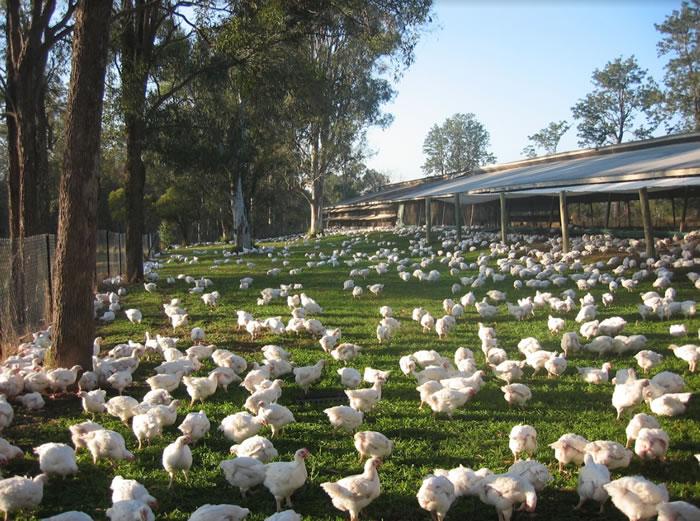
Under Australian Consumer Law, egg producers cannot use the words ‘free range’ on their egg cartons unless the eggs were laid by hens that:
- had meaningful and regular access to an outdoor range during daylight hours during the laying cycle
- were able to roam and forage on the outdoor range
- were subject to a stocking density of 10,000 hens per hectare or less.
All eggs labelled as ‘free range’ must have the stocking density prominently displayed on the packaging. For more information, see Free range
Other methods
Some food labels include information about production methods that relate to people’s personal values or ethics, such as:
- religious reasons (such as ‘kosher' or 'halal’)
- environmental concerns (such as carbon footprint labelling)
- animal welfare concerns (for example, ‘dolphin friendly’)
- human rights issues (for example, fair trade, no child labour).
The Food Authority does not enforce these types of food labelling.
Businesses can voluntarily provide this kind of information on the labels of their food products, as long as the information is not false, misleading or deceptive under Australian Consumer Law.